Local-first memory layer for agent workflows and work context
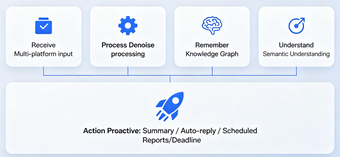
openloomi, from Melandlabs, is a local-first AI workspace that addresses assistant ‘forgetting’ by building a persistent context graph for work. It exposes that memory to agent runtimes via the Model Context Protocol, letting agents read project history and people context. The app assembles a growing context, runs context-aware follow-ups, and supports extensible skills. It targets developers, project managers, and AI enthusiasts who need an auditable, on-device memory surface for agent-driven work.
What tasks can you actually use it for?
The tool functions as a dedicated memory surface for agent-driven workflows, storing project histories, decisions, and people relationships so agents can reference prior work. It connects to messaging and productivity sources, with connectors listed for Telegram, WhatsApp, WeChat, Gmail, Outlook, Jira, and GitHub, and also notes Slack, Google Calendar, and Discord integrations. Users can expect the app to support context-aware follow-ups and proactive task execution tied to those synced sources.
How reliable is its memory and proactive behaviour?
OpenLoomi stores raw data locally, using IndexedDB and SQLite and applies AES-256 encryption to on-device storage, which preserves data sovereignty by design. It runs as a native desktop app and serves context over MCP so agent queries read the same graph. The project is open-source, enabling auditability of the memory layer, though maturity and community support affect long-term reliability.
What file and platform inputs does it accept and what setup does it require?
The app runs as a native desktop application with installers for macOS (Apple Silicon and Intel), Windows (.exe), and Linux (.deb and .rpm), and it functions as an MCP server for clients. Developer setup requires Node.js 22+, pnpm 9+, and Rust 1.75+, and Windows builders need Visual Studio Build Tools with the C++ workload. Those requirements make local builds straightforward for technical users, but heavier for non-developers.
Does it integrate with agent runtimes and extend via community skills?
The software presents itself as a plug-in memory server for agent architectures, implementing MCP so compatible agents can query the evolving graph. It exposes an extensibility model through open-sourced "skills" that integrate with agent runtimes, offering a path to add domain-specific actions. This design suits teams that expect to author or audit skills and attach the memory layer to existing agent tooling.
Best suited to technically skilled teams who accept early-stage trade-offs
Given its local-first design and auditability under an open-source license, the app is a practical choice for technical teams that need on-device memory for agents. Expect setup friction for non-developers because of the Node.js, pnpm, and Rust toolchain requirements, and note that the project is currently in early-stage releases (v0.5/v0.6), so integration work and community skill development remain necessary.
Pros
Local storage and AES-256 encryption keep raw data on the device
Connectors include major messaging, email, and project tools for context sync
Acts as an MCP server so agents can query a structured context graph
Open-source skills enable audit and custom extensions
Cons
Early-stage release (v0.5/v0.6) may have rough edges
Initial setup requires Node.js, pnpm, and Rust developer toolchain
Integration relies on connector completeness for accurate context
Laws concerning the use of this software vary from country to country. We do not encourage or condone the use of this program if it is in violation of these laws. Softonic may receive a referral fee if you click or buy any of the products featured here.